

Contributors: Stephanie Hepburn
Date published: 15 December 2025
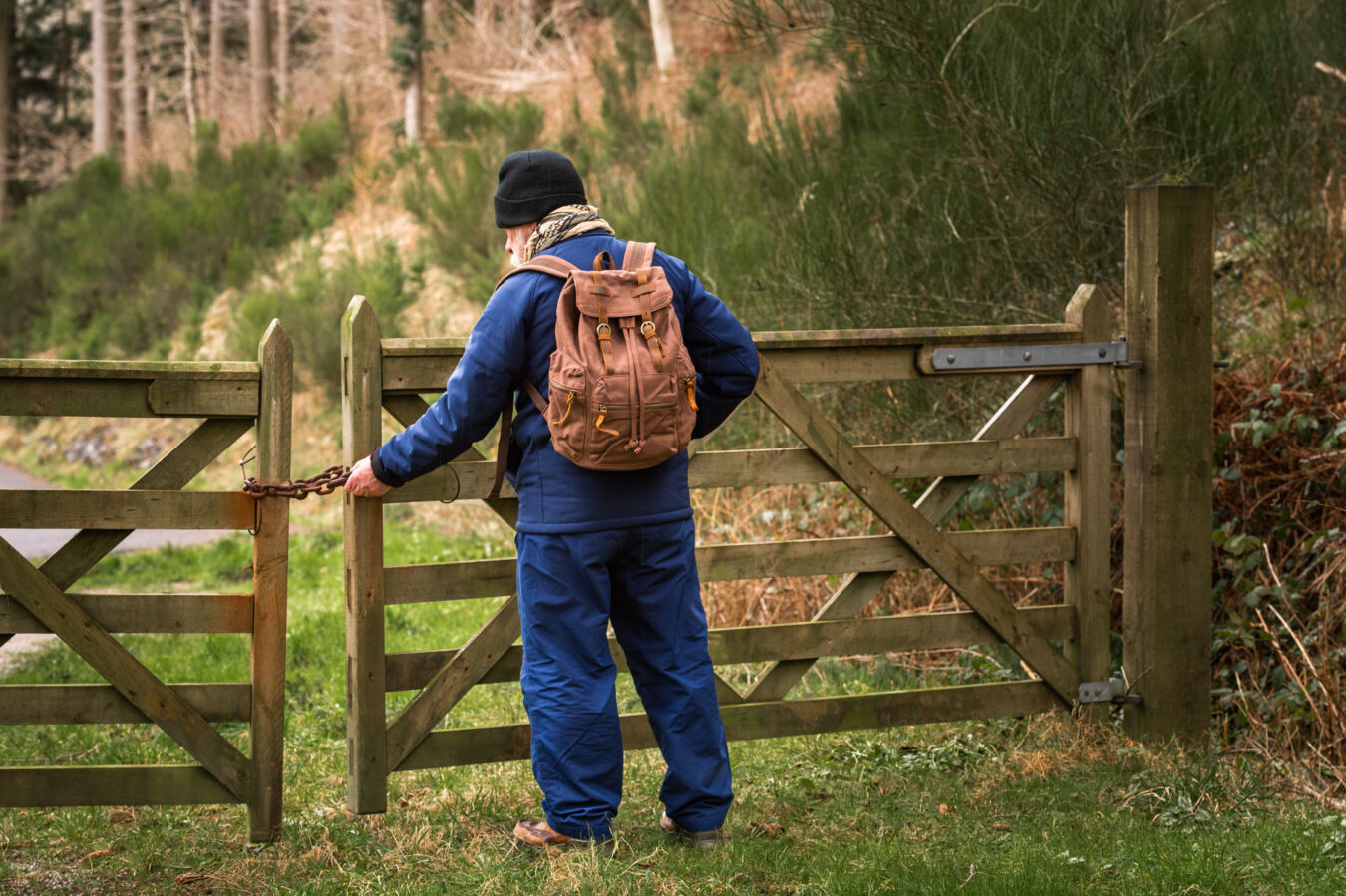
Don’t Stop Me Now: Locked gates and access rights in Scotland
Gates and locks are essential aspects of everyday life. But they can also give rise to legal disputes, if people disagree about who is entitled to pass through. There are three main legal ways that someone may have a right to access: a private servitude right, a public right of way, or the statutory rights of responsible access under the Land Reform (Scotland) Act 2003. Each of these has very different legal implications when attempting to resolve a dispute.
Servitude rights of access
Servitude rights of access attach to land, and are typically created in one of three ways: express grant in the relevant property deeds; implied by law; or acquired by “positive prescription” (in other words, having been used for at least 20 years without interference).
One common example of a servitude right of access is the right to access a neighbouring property in order to reach your own property. It might also arise for the purpose of carrying out repairs – either to your own property, or to utility, drainage and sewerage services which service your own property but are located on another property.
Where a servitude right of access is established, a party is entitled to exercise that right free from “unreasonable obstruction”. The legal test is whether the obstruction materially interferes with the right of access. Each case will therefore be considered on its own particular facts and circumstances, and the courts in Scotland have consistently upheld the general right of the property owner to erect gates, so long as they do not cause a material interference or inconvenience to the average person.
In Drury v McGarvie 1993 SC 95, elderly proprietors argued that the installed gates were too heavy, but the court held that the test is an objective one that assesses whether an average person could open them. Locked gates were acceptable if a key was provided. More recently, Skene v Braveheart Hotels Ltd [2021] SC DUN 25 involved gates erected at Fernie Castle for guest safety. Although Mr Skene struggled to open them, the court reaffirmed the objective standard and found that gates were not an unreasonable obstruction because servitudes attach to property, not personal circumstances.
Public rights of way
Public rights of way are established through uninterrupted use for at least 20 years along a more-or-less defined route that connects two public places. Unlike servitudes, they are not tied to ownership of neighbouring land, but arise from collective usage by the public over time. There is no formal requirement for registration, though ScotWays maintains a national Catalogue of Rights of Way as a helpful record.
By keeping gates easy to use and properly maintained, landowners and access users can ensure that public paths remain accessible for all who travel through them – and in this respect the courts have consistently been willing to uphold the rights of those exercising public rights of way. For example, they have refused claims by landowners who were using gates as a way of preventing the public from using these routes.
Statutory access rights
The Land Reform (Scotland) Act 2003 grants the public statutory access rights over most land and inland water in Scotland for recreation, education, and certain non‑commercial purposes. These rights (commonly known as the “right to roam”) must be exercised responsibly. Generally, this means that access rights should be exercised so as not to cause unreasonable interference with the rights of any other person (including the landowner). The Scottish Outdoor Access Code, which was produced by Scottish Natural Heritage, provides a comprehensive guide to responsible conduct.
It is not only access users that must exercise their rights responsibly; there are also reciprocal obligations on landowners to act in a responsible manner. Landowners may install gates for legitimate land management reasons – for example to control livestock or protect crops – but they must not lock or design them in a way that prevents public access. The Act specifically prohibits obstructions, signage, or barriers whose sole purpose is to deter or prevent responsible access. Local authorities are empowered to investigate and issue enforcement notices where landowners act unlawfully.
The case of Renyana Stahl Anstalt v Loch Lomond & Trossachs National Park Authority [2018] CSIH 22 illustrates this principle. A landowner had erected signs and installed locked gates that effectively blocked public access to land within the National Park. The court held that this was a breach of the Act, and that the Park Authority was entitled to require removal or unlocking of the gates. The decision highlighted that access rights must be freely exercisable by the public, without reliance on keys or codes. Gates are often necessary, but they must be designed in a way that supports Scotland’s statutory right to roam.
How can we help?
We frequently advise clients on access rights, and have considerable experience of enforcing or protecting both landowners’ rights and access rights. This can be done via correspondence, the courts, or alternative methods of dispute resolution such as mediation.
For enquiries in relation access rights or disputes, please contact Stephanie Hepburn, a Partner in our Rural Disputes team.
This article was co-authored by Trainee Eva Curran.
Contributors:

Stephanie Hepburn
Partner
Further / related posts
24 September 2025
Why legal disputes don’t have to be scary
Contributor: Stephanie Hepburn

26 June 2024
The right to roam: Know your rights and responsibilities
Contributors:
Emma De Sailly, Stephanie Hepburn, Hamish Lean

25 June 2024
Right to roam – wild camping legal rights in Scotland
Contributor: Stephanie Hepburn
To find out more contact us here
Expertise: Rural Disputes
Sectors: Right of Responsible Access