
Contributors: Stephanie Hepburn
Date published: 10 August 2026
Download as PDFScotland’s crofters can help to achieve the nation’s renewable energy targets
This article was first published in Scottish Farming Leader.
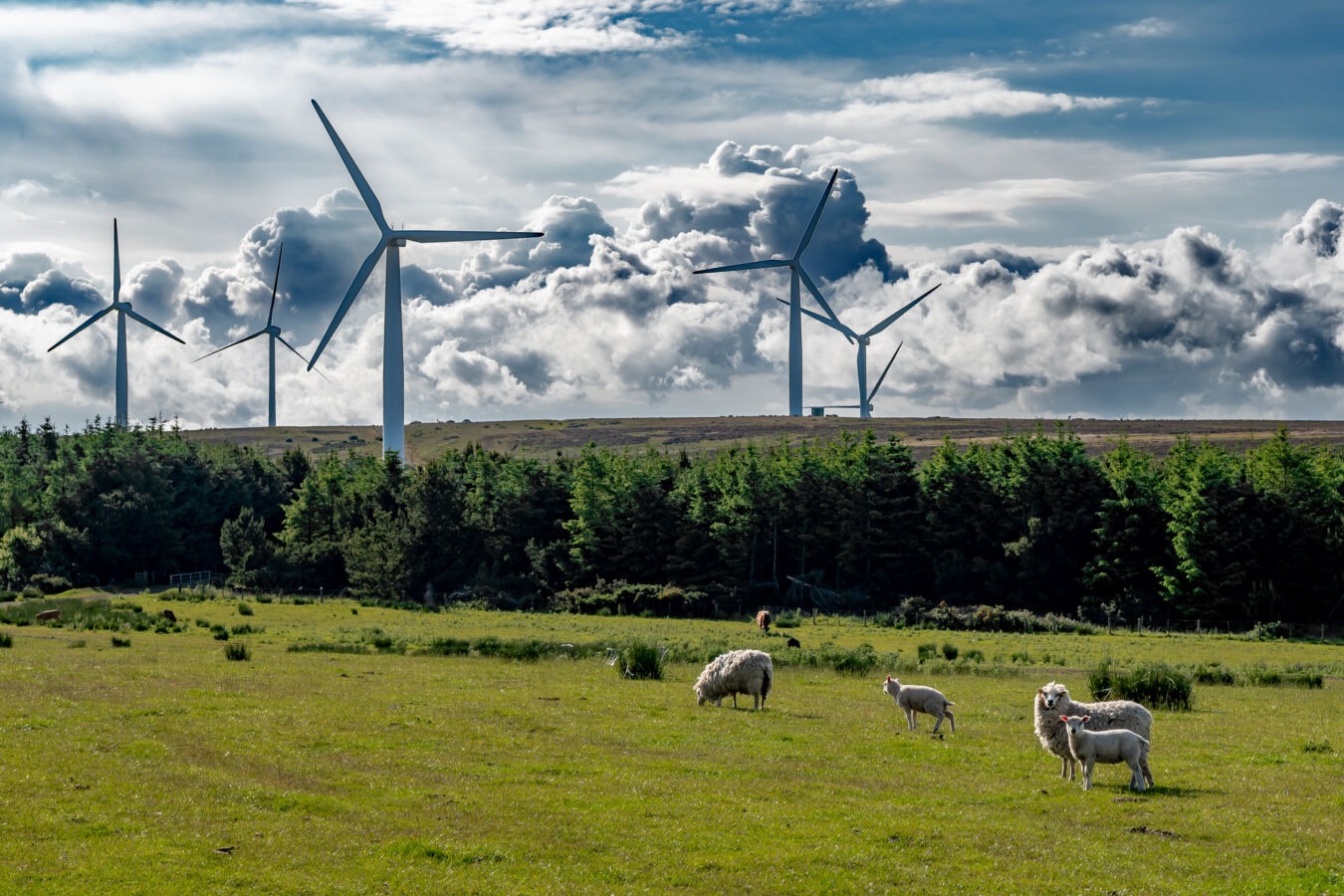
Currently, around 30% of Scotland’s overall energy consumption comes from renewable sources. The Scottish Government wants that to increase to at least 50% by 2030, so clearly we will need to build more onshore wind turbines and other renewables projects. Much of the country’s rural land is ideally suited to this – including the 750,000 hectares of it that is held in crofting tenure.
Crofting is a traditional system of land management that goes back centuries. The legislation that protects it dates back to 1886, when laws were introduced to give crofters security of tenure after the unrest that followed the Highland Clearances. That right still remains, but crofters also have duties, including to cultivate the croft or put it to another purposeful use.
At first glance, it may appear that crofting law makes it more challenging to get a renewable energy project off the ground. Certainly, careful consideration needs to be given to both the rights and duties of the crofters, and the crofting community as a whole, before any development plans are put in place. But solutions can be found that achieve the objectives of all concerned.
Which of the available options is best suited to any particular project will depend on many factors, including the size, scale and type of development proposed; whether it is being driven by the landowner, the crofter or a third party such as a developer; and the views of the crofter and crofting community. Aligning their interests with those of the landowner and any developer will greatly increase the chances of a good outcome.
Successful renewable energy developments have already been built on croft land. The largest community wind farm in the UK is Beinn Ghrideag. With three turbines built on common grazings land on the Isle of Lewis, it produces around £900,000 a year in net income for the local community.
And it is not only onshore projects that may need to address crofting law. Offshore wind projects may need to utilise croft land too, as the electricity they generate will flow through underground cables to onshore substations, which might be ideally located on land that is subject to crofting tenure.
The legal processes
When looking to develop croft land, there are several legal routes that can be pursued.
Often, an application may need to be made to the Scottish Land Court, either for a ‘resumption order’ or for approval of a ‘scheme for development’.
A resumption order removes the land from the control of the crofting legislation, leaving the landlord free to enter into an agreement with a developer, or to develop the land themselves. It is usually temporary, lasting only for the lifetime of the development. After that, the land is restored to crofting tenure.
With a scheme for development, however, the affected land is retained within crofting tenure but the rights of the crofters are suspended for the lifetime of the development. There is no change to the status of the land as a croft, and it can still be used for crofting purposes – subject, of course, to the needs of the development.
Both options allow for compensation for the affected crofters.
The Crofting Commission can also have a part to play. It is a non-departmental public body that is responsible both for regulating crofting and for promoting the interests of crofting. In the circumstances described above, where either resumption or approval of a scheme for development is being sought from the Land Court, the application must often also be sent to the Crofting Commission. If it sees fit, it can object to the application, even if it is not otherwise opposed by anyone else.
Also, when landowners want to develop land where the croft is vacant, they can apply to the Crofting Commission for a ‘decrofting direction’. This has the same effect as a resumption order – removing the land from crofting tenure – but without the need for proceedings in the Land Court.
A win for everyone
When the right solutions are found, the benefits for all can be considerable. As well as generating a new income stream and contributing to a clean-energy future, many of these projects require a relatively small amount of land and so leave much of it still available for farming. Crofting has a long and rich cultural history, and renewable energy can be part of its prosperous future.
Contributors:

Stephanie Hepburn
Partner
Further / related posts
6 November 2026
Navigating the legal landscape of Scottish forestry
Contributor: Katie McNab

23 October 2026
Bang on: The laws around fireworks displays
Contributors:
Stephanie Hepburn, Kevin Clancy

23 October 2026
Contributors:
Killian Dockrell, Shona Lean
To find out more contact us here
Sectors: Crofting Law, Rural Property and Business