

Contributors: Euan Murray, Steven McLaughlin
Date published: 1 April 2026
Download as PDFConstruction challenges in scaling renewable infrastructure
This article was first published in The Herald.
Ambitious targets for renewables and the transition to net zero are driving new infrastructure projects across the UK. However, there are several challenges to delivery which need to be addressed to enable the industry to scale up wind, solar, storage, and grid upgrades quickly enough to meet demand. Current projects are facing several constraints and bottlenecks, including delays in equipment delivery, ports infrastructure that needs upgraded, and a transmission grid that struggles to absorb new capacity.
Growing supply chain risks
Long lead items and logistics for large scale projects continue to be an issue and developers need to factor this in early to their projects. Transformers, cable, high‑voltage switchgear, turbine components, and inverters are manufactured in a small number of global facilities, and any disruption to factory outages, shipping delays, or export restrictions can push a project programme by months. Concerns of this nature are further heightened due to current geopolitical disruption in Europe and the Middle East.
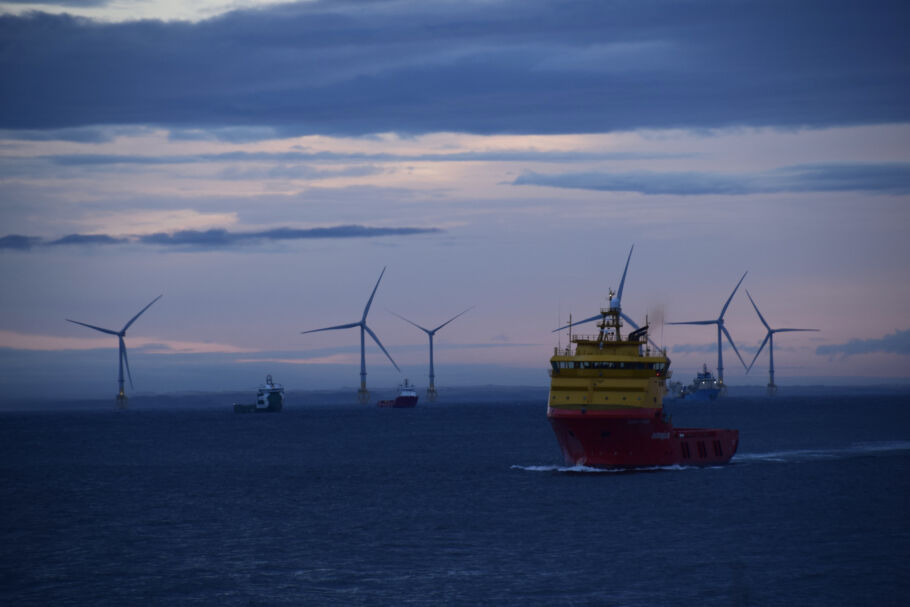
For offshore projects or transportation routes that include delivery by vessel, developers are finding that specialised vessels and port space are scarce, and the two need to be combined as vessels must be suitable for selected ports.
In order to mitigate this, it is critical that developers plan early and strategically. Appropriate ports and vessels must be identified and long lead items planned for. This can mean implementing reservation agreements or early works agreements, often with advance payments and security requirements, in order to secure capacity. It is also critical that the UK continues to build and repurpose its domestic supply chain, and ensure a just transition of our highly skilled oil and gas workforce for the UK renewables industry (both offshore and onshore).
Construction risk
On‑site construction introduces a second layer of uncertainty. Groundworks, access roads, and civil infrastructure can often determine or alter the critical path. Key risks need to be considered on a project specific basis, including weather and metocean risk, unexpected ground conditions, transport, and route planning. Labour shortages in specialist construction trades, such as crane operators, HV technicians, and cable jointers all need to be considered and factored into a project’s procurement strategy.
Developers need to consider the optimal contracting model for each project including whether to contract on an engineering, procurement, and construction (EPC) basis with a single responsible contractor, or whether to utilise a disaggregated multi-contracting model. Contracting models that transfer most risk to a single EPC contractor can attract higher cost but deliver single point responsibility for the developer, though some EPC contractors may not be best placed to deliver specialist services and equipment. Multi-contracting can provide better value but, in turn, this results in higher interface risk which needs to be carefully considered and managed proactively to mitigate delays. Both models require early‑stage planning, realistic contingency allowances, and collaborative contracting.
Conclusion
The rising demand for energy in the UK from both the transition to net zero and the adoption of new technologies like Artificial Intelligence is likely to significantly increase electricity demand in future. For example, Ofgem recently noted there is current demand for 140 new data centre projects requiring a 50GW demand in the UK. The existing geopolitical climate also brings energy security into sharp focus. Addressing the challenges to scaling renewable infrastructure is therefore critical and requires industry collaboration. We need to diversify supply sources, invest in national renewable energy infrastructure, and develop and repurpose our existing highly skilled workforce and supply chain if we are to deliver renewable infrastructure at sufficient scale to meet this demand.
If you have any questions, please contact a member of our Construction and Infrastructure team.
Contributors:


Steven McLaughlin
Solicitor
Further / related posts

21 November 2023
Transforming public procurement – The Procurement Act 2023
Contributors:
Euan Murray, Colin Bathgate

15 September 2026
A new EPC Regime is coming to Scotland: Are you ready?
Contributors:
Emma Guthrie, Ann Stewart
14 September 2026
Government-funded investment in the energy transition: What’s changed since April
Contributor: Graham Young
To find out more contact us here
Expertise: Procurement
Sectors: Clean Energy, Construction and Infrastructure, Energy and Natural Resources, Real Estate and Infrastructure