Contributors: Stephanie Hepburn
Date published: 9 April 2026
Download as PDFOpening up the road to resolution
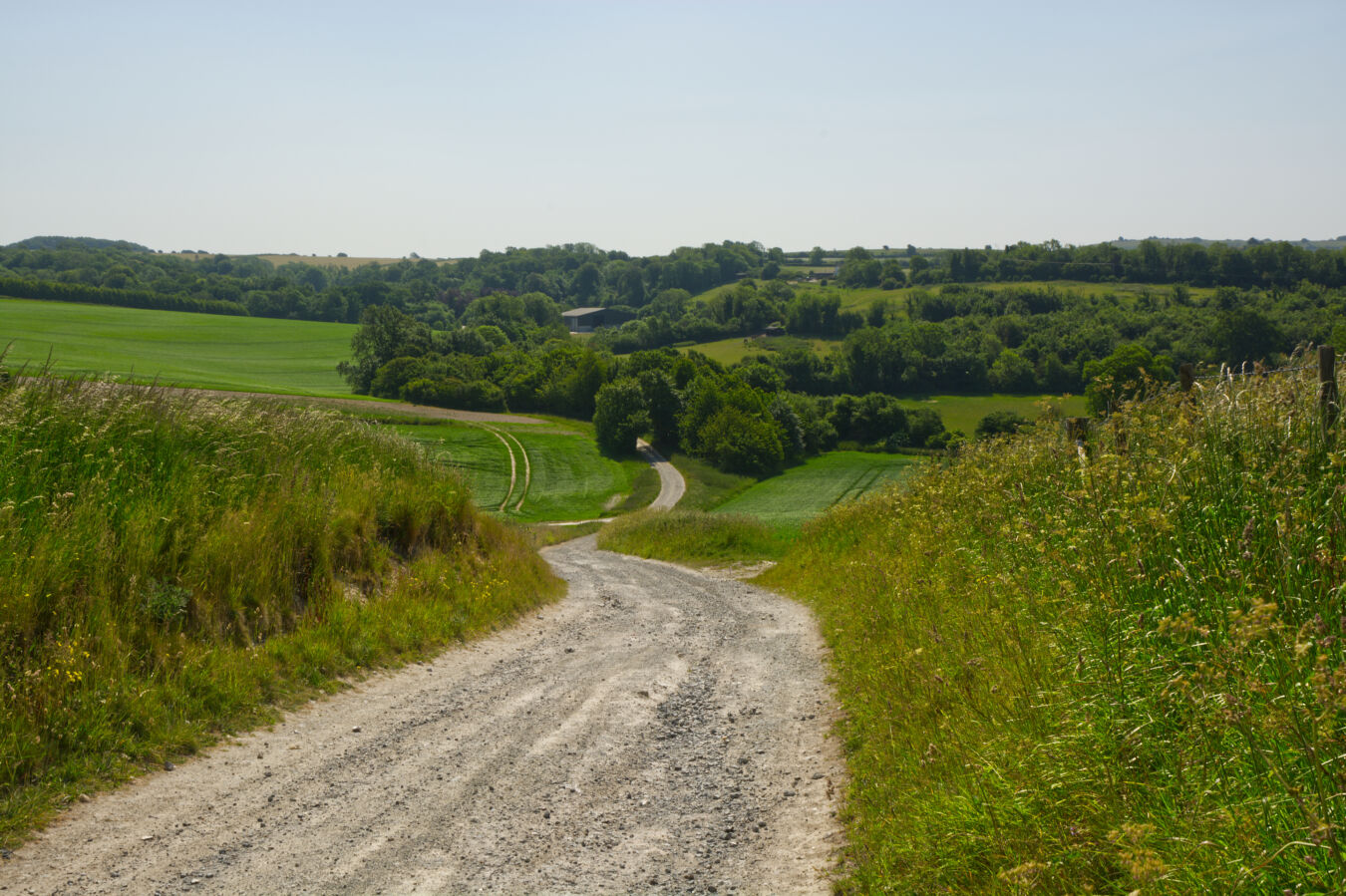
Pippa Middleton and her husband James Matthews have attracted some unwelcome headlines recently. The precise facts of the matter are not entirely certain, but it concerns a small road that runs through their estate in Berkshire, which for many years has often been used by others in the village to gain access to a public footpath. The couple have closed off the road, forcing people to instead walk along a bigger road that is used by cars but has no pavement. Unsurprisingly, this has been met with vociferous complaints from many of the village’s residents.
It’s a common misconception that such a dispute could not arise in Scotland because of the Land Reform (Scotland) Act 2003, commonly known as ‘the right to roam’. In fact, though, the right to roam legislation is very different from access to public rights of way – a path may be a public right of way but fall outwith the scope of the 2003 Act, or, more commonly, land can be accessed publicly due to the provisions in the 2003 Act but it is not a public right of way. Further, the right to roam may allow people to camp, whereas a right of way only allows passage from one point to another. On the other hand, in some cases public access rights permit motorised vehicles whereas the right to roam does not. In short, the Land Reform (Scotland) Act 2003 in no way repeals or overrides any existing public rights of way, although it may sit alongside them.
Like England & Wales, Scotland has many public rights of way – including some of the country’s most famous routes such as Lairig Ghu and Jock’s Road – and before the introduction of the 2003 Act they were the main form of legally protected access in Scotland. But there are some differences between the two jurisdictions. One of the most significant is that in Scotland there is no legal requirement for a right of way to be recorded. Local authorities may have records, and ScotWays maintains a National Catalogue of Rights of Way, known as CROW – purchasers of rural land commonly ask ScotWays to check whether CROW records any public rights of way over the land. But CROW is not an exhaustive list, and many rights of way are known only to local people… until a problem arises.
So, if a situation similar to the Middleton/Matthews one arose in Scotland, what could the local residents do?
They could establish that a public right of way exists. The test for this is set out in the Prescription and Limitation (Scotland) Act 1973: “If a public right of way over land has been possessed by the public for a continuous period of twenty years, openly, peaceably and without judicial interruption… the right shall be exempt from challenge.”
And there are two other requirements as well: the route must be defined, and there must be a public place at either end of it. However, it is not essential that there is a visible track, and the route does not have to be a path. It may be a structure: a bridge, for example.
The law also places some limitations on people who are accessing a public right of way. For example, they must do so ‘civiliter’ – that is, with as little disturbance to the landowner as possible. Using a right of way to obstruct someone can be a criminal offence under the Civic Government (Scotland) Act 1982. And, unlike with servitudes, users have no power to vary the route, apart from when avoiding natural obstructions such as landslides.
There are different categories of rights of way: pedestrian, horseback, and carts or carriages (which today includes most motor vehicles). The key principle here is that ‘the greater includes the lesser’ – so if a right to use cars is established then this also includes pedestrians and horses – but not vice versa.
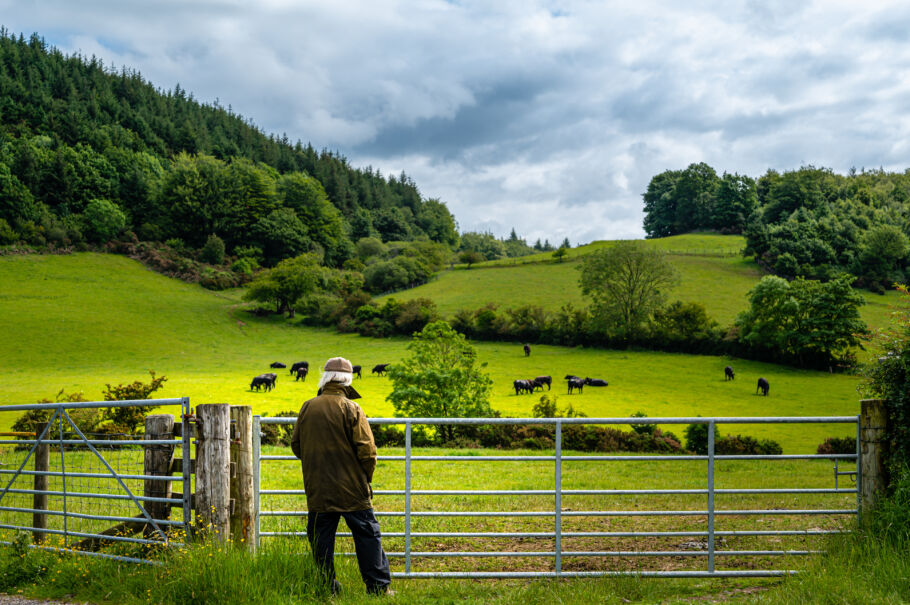
If the public were unsuccessful in establishing that the path was a public right of way, it remains possible for them to rely on the rights of responsible access set out in the 2003 Act. However, the landowner could seek to exclude the land on the basis that it is adjacent to their house and is reasonably required for their privacy – in short, that it forms part of their garden. They may also seek to exclude land which is used for particular recreational purposes or is an area where crops have been sown or are growing.
The landowner’s obligations in both situations are harder to define, not least because many different laws can apply (including statute and common law), but as a general rule it is sometimes permissible to put up a gate or a stile that doesn’t materially interfere with other people’s access. In some cases, the planning authority’s permission will be required.
Signage is another tricky area. The mere existence of a sign will probably be permissible provided that it is necessary and reasonable. But messages such as ‘Beware of the bull’, ‘Trespassers will be prosecuted’, and ‘No dogs allowed’ all present different legal problems.
The dispute in Berkshire has not yet been resolved, and we cannot say for sure what the result would be if it were taking place in Scotland. As always, however, the key point is that in most disputes there are many possible roads to a resolution, and it’s usually best to keep as many of them open as possible.
Our Rural, Residential and Private Wealth Disputes team is highly skilled in all the main forms of dispute resolution, including mediation and negotiation as well as litigation. If you’d like to discuss your own particular situation, please get in touch.
Contributors:

Stephanie Hepburn
Partner
Further / related posts

23 October 2026
Bang on: The laws around fireworks displays
Contributors:
Stephanie Hepburn, Kevin Clancy
23 October 2026
Let the right one in: Prescriptive servitudes
Contributor: Stephanie Hepburn
23 October 2026
Don’t let a green burial come back to haunt you
Contributor: Stephanie Hepburn
To find out more contact us here
Expertise: Dispute Resolution
Sectors: Right of Responsible Access, Rural Property and Business