

Contributors: Shona Lean
Date published: 15 December 2025
When a hedge becomes a headache
Boundary disputes between neighbours are common, and many of them involve the maintenance of features such as fences, walls, hedges or trees. In this article we consider how the boundary is likely to be determined; the parties’ potential rights and remedies where there is a dispute; and how the provisions of the High Hedges (Scotland) Act 2013 might help to resolve some of these situations.
Where is the boundary?
Determining the boundary of a property is sometimes a straightforward exercise – but not always.
Where title to a property is registered in the Land Register of Scotland, there will be a title plan that shows the legal boundary of the property. This can often be easily matched up to the physical boundaries on the ground, particularly with newer properties.
However, title to many properties is still held on the historical Sasine Register, and deeds in the Sasine Register sometimes contain only a written description of the boundaries rather than a plan. This can make it much more difficult to determine the legal boundary, especially if the description does not match the current reality on the ground. The written description may refer to boundary features (such as rocks, fences, or streams) that are no longer in place. Even if the deed does include a plan, it can be difficult to decipher. It may therefore be necessary to employ specialist mappers to take the descriptions contained in the deeds and plot them on the ground. Even then, different mappers may have differing interpretations of those descriptions or plans.
Who owns boundary features?
In some cases, the legal boundary will not match the physical boundary features that exist on the ground, meaning that a party may be occupying more or less land than they are legally entitled to. Boundary features could be a fence, wall, hedge, tree, ditch, or even just a simple row of boulders, slabs or a driveway.
Therefore, when dealing with any particular boundary feature, the key question is often: who owns it?
Typically, if a boundary feature lies entirely within the demise of one property, then it will form part of that property and will therefore be the sole responsibility of the owner of that property, albeit there can be exceptions to that general rule.
The position is less clear when a boundary feature such as a wall or fence is seemingly built directly on the boundary line between two properties. In many cases, the ownership and responsibility for that boundary feature will depend on the description in the title deeds, and there are a variety of common law and statutory rules which govern these situations.
Where title deeds are silent, then it is generally assumed that neighbouring proprietors each own the boundary feature up to the midpoint, and are both responsible for its repair, renewal and maintenance.
What remedies are available in the event of a dispute?
If there is a manifest inaccuracy in the Land Register of Scotland, then it is possible to apply to have that rectified. You can read more about what amounts to a manifest inaccuracy and the process involved here – Land Boundary Inaccuracies and Disputes.
A common motivation for seeking rectification is that a party considers that the boundaries of a given property are not shown accurately on the Land Register. If an application for rectification is made, those who will be materially affected by the rectification will be notified and given an opportunity to object. If an objection is made and a dispute arises as to the true location of the boundary, the Keeper is likely to require a judicial determination by the Lands Tribunal or the Court on the matter. (The parties must then accept this, subject to any appeal.) As part of this, it is also possible to seek to “interdict” a party from continuing the encroachment. This is equivalent to an injunction in England and Wales.
Maintenance obligations are also often disputed. Many of those cases concern overgrown or overhanging trees, shrubs or hedges, which may be the physical boundary between properties. The general position in Scotland is that branches overhanging the boundary between properties, or roots shooting into neighbouring ground, are actionable as an encroachment. An affected party can therefore normally chop back any trees or hedges that overhang or encroach on their land up to the boundary, and similarly deal with any roots.
Some words of caution for anyone who is thinking about doing this. Discuss the matter with your neighbour before doing anything. It is also important to note that you cannot access the neighbour’s property to do the work, unless you have their permission; and any branches you remove belong to them. You also must be careful not to affect the health of the tree or hedge, and to ensure first of all that any problem trees are not subject to a Tree Preservation Order.
High hedges
If the problem is not overhanging branches, but rather the height of a hedge, the High Hedges (Scotland) Act 2013 may provide a remedy.
The Act grants local authorities the power to act as adjudicators in disputes between neighbours about overgrown hedges. The purpose of the legislation is to provide a solution to the problem of high hedges where they interfere with a person’s right to “reasonable enjoyment” of their property, including enjoyment of light.
The Act defines a high hedge as one which is a row of two or more trees or shrubs of any kind, which is over two metres high, and which blocks light. It does not include overhanging branches and roots, single trees or trees that do not form a hedge, or hedges with gaps that let through a reasonable amount of light.
If a party believes that they are being affected by a “high hedge”, they should take all reasonable steps to try to reach an amicable resolution with their neighbour. If that is not possible, they can then apply to the local authority for a High Hedge Notice.
The hedge owner is then notified, and is given 28 days to respond. The local authority will then make a decision, having regard to all of the relevant circumstances.
If the local authority decides that action is required, it will issue a High Hedge Notice. This will include a description of the hedge, any initial action required, the period of time the hedge owner has to comply with the notice, any preventative action required, and the right to appeal. The Notice is binding on the current and subsequent owners of the property.
How can we help?
When any kind of neighbour disputes arise, it is important to take specialist legal advice at the earliest opportunity so that appropriate action can be taken. In many cases, this can stop disputes escalating and further damaging neighbourly relations.
We frequently advise clients on boundary disputes, and also have considerable experience of resolving them. This can be done via correspondence, the courts, or alternative methods of dispute resolution such as mediation.
For enquiries in relation to boundary, or other disputes, please contact Shona Lean, Solicitor in our Rural Disputes team.
Contributors:

Shona Lean
Solicitor
Further / related posts

6 January 2026
Right to roam v right to resort: Planning permission granted for Center Parcs Scotland
Contributor: Stephanie Hepburn
15 December 2025
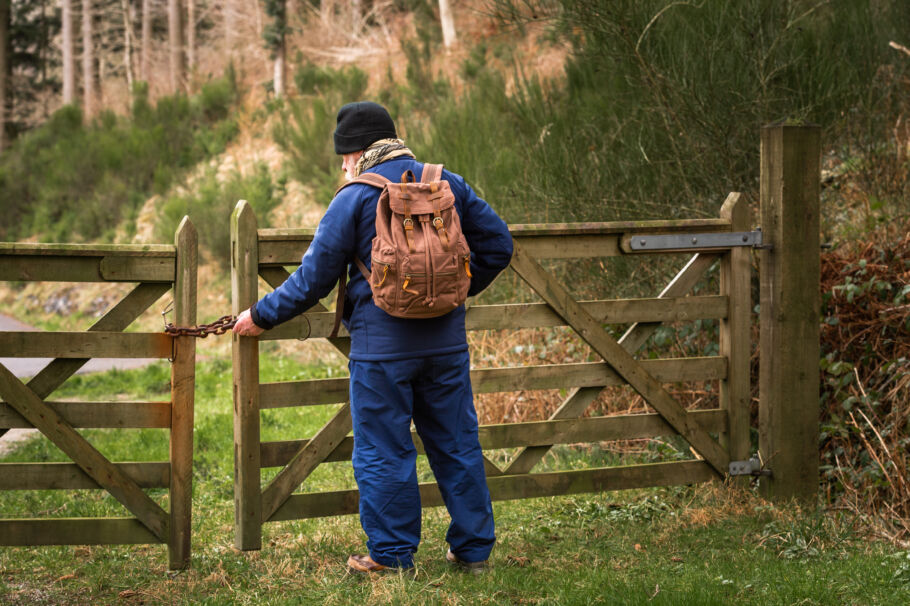
Don’t Stop Me Now: Locked gates and access rights in Scotland
Contributor: Stephanie Hepburn

15 December 2025
The use of drones in the countryside
Contributor: Ruairidh Leishman
To find out more contact us here
Expertise: Rural Disputes