
Contributors: Ruairidh Leishman
Date published: 15 December 2025
The use of drones in the countryside
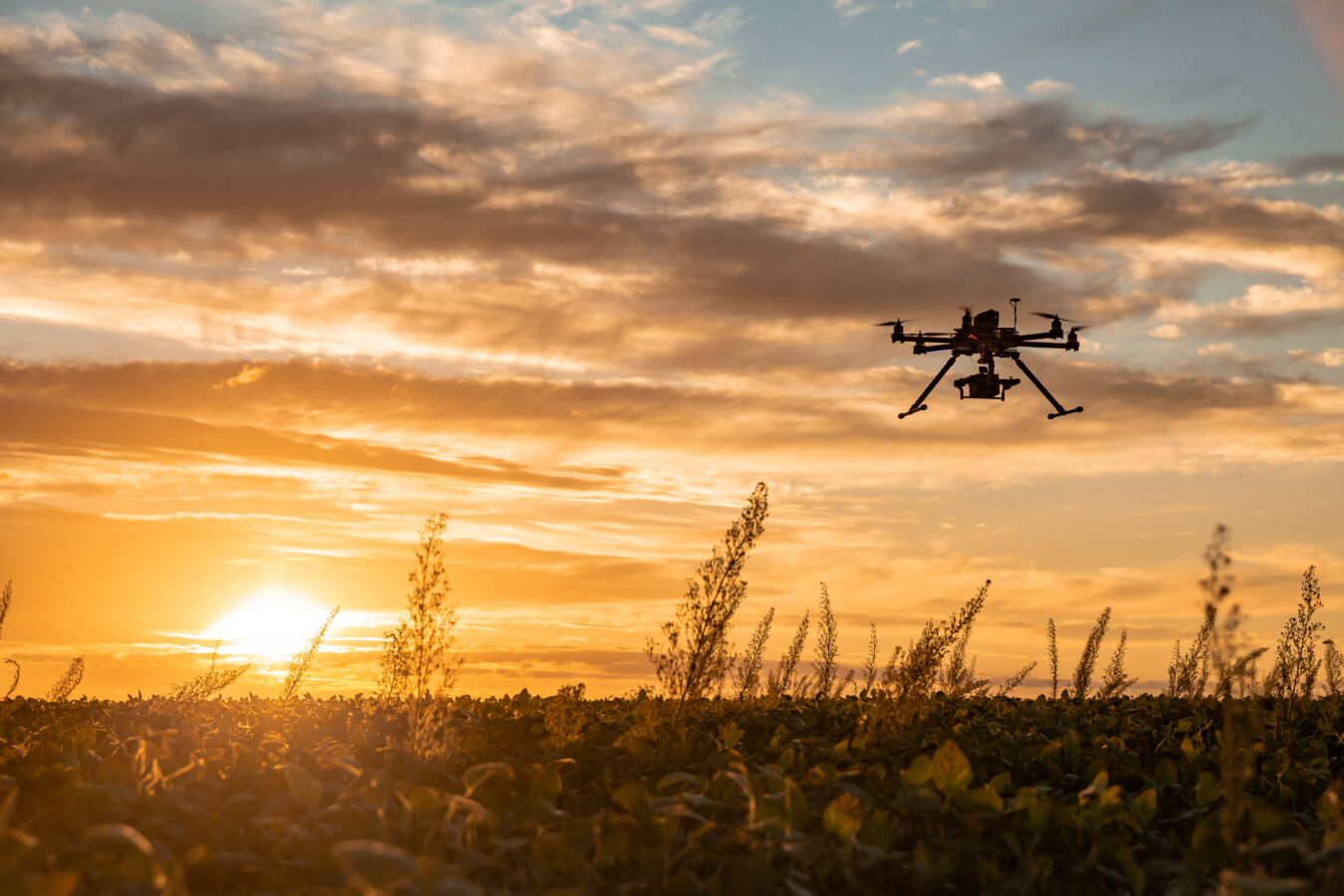
Drones are used extensively by farmers and surveyors, for example to map and monitor crops. However, they are also used by other people for recreation, particularly for aerial photography: stately homes, sites of natural beauty, historic sites and unique landmarks are all popular targets. This creates a new incarnation of a problem that has existed for centuries – how to balance rural landowners’ rights to protect their property with the rights of other people to access that land. The law is evolving rapidly.
The starting point is that, as with any tool or vehicle, the person controlling it must do so responsibly. This article looks at six aspects of that obligation: safety, distance, licensing, insurance, privacy and trespass.
Safety
All drone pilots and operators must comply with the paramount consideration that applies to all aviation activity at all times, namely that a “person must not recklessly or negligently cause or permit any [drone] to endanger any person or property”; and that the drone’s operator must take “any appropriate actions to ensure the safety of the operation.”
Distance
Legislation specifies conditions relating to the flying of drones, including a maximum flying height of 120m above the surface of the Earth. The pilot is prohibited from flying the drone beyond their visual line of sight. So, for example, if the pilot needs to use binoculars or a smartphone camera to see the drone, it is too far away from them.
The pilot must also fly the drone at a safe distance from people, and not overfly assemblies of people. The regulations around this are rather complex, and include three sub-categories of drones, often referred to as “Over People”, “Near People” and “Far from People”. Another distinction is made between “involved people” – those who are involved in what the pilot is doing, such as friends and colleagues – and “uninvolved people” who are not.
In broad terms, the requirements are that drones should not be flown directly over crowds or uninvolved people. An exception to this is that drones weighing 250g or less can be flown over uninvolved people, but that this should be unintentional and, if it happens, should only be for a limited period. Also, drones should not be flown within 50m of uninvolved people.
Licensing and registration
From 1 January 2026, new rules will apply to all drone users in the UK. These will include a requirement for anyone flying a drone over 100g to have a ‘Flyer ID’, which shows that they have passed the basic competence test; and the introduction of ‘Remote ID’ functionality, which enables a drone to automatically broadcast its identification and location while flying.
Insurance
The UK requires all commercial drone operators to have third party liability insurance. However, leisure operators are only required to have insurance if the drone weighs more than 20kg. This means that the vast majority of leisure drone activity is exempt from the obligation.
Privacy
A drone fitted with a camera or listening device could affect people’s privacy. In the UK, the processing of personal data captured via drone is subject to the general domestic law applicable to data protection and privacy, rather than any specific legislation focused on drones.
Trespass
A key legal question for rural landowners is whether flying a drone over someone else’s land constitutes a trespass. We don’t yet have a clear answer, but the issue has started to come before the courts in both Scotland and in England & Wales.
There have been two decisions from the English courts. In Anglo International Upholland Ltd v Wainwright [2023] 5 WLUK 613, the judge determined that flying a drone so that footage can be taken means that its height above the ground could not be said to be “reasonable” and was, therefore, a trespass.
In MBR Acres Ltd v Curtin [2025] EWHC 331 (KB), however, the judge determined that the flying of drones over the land in question and taking photographs of it did not amount to an actionable trespass. An owner’s rights in the airspace above their land were restricted to such height as was necessary for the ordinary use and enjoyment of the land and structures upon it and, in this case, the owner was unable to present any reliable evidence as to height of any drone flying over the land.
The judges’ different decisions were based not just on different reasoning but also, crucially, on different evidence.
In Scotland, the starting point regarding airspace rights is different. In Scots law, the owner of land has the exclusive right to occupy not only the land, but what is above and below it, “from the centre of the earth to the heavens”. Therefore, decisions of the English courts ought to be treated with some caution. The only reported case which considered the prohibition of flying a drone is Mowi Scotland Ltd v Don Staniford [2024] SAC (Civ) 8. Mowi owned and operated several salmon farms, and had obtained an interdict (similar to an injunction in England & Wales) that prevented the defender from flying drones above them. However, on appeal this prohibition was removed.
So the issue remains undetermined in Scotland as well.
We can help
If you’re concerned about the legal aspects of your own use of drones, or someone else’s, or a potential or ongoing dispute about the use of drones, please contact our Dispute Resolution team.
Contributors:

Ruairidh Leishman
Senior Associate
Further / related posts

8 January 2026
Community Right to Buy: Abandoned neglected or detrimental land
Contributor: Ann Stewart
6 January 2026
Right to roam v right to resort: Planning permission granted for Center Parcs Scotland
Contributor: Stephanie Hepburn
15 December 2025
Don’t Stop Me Now: Locked gates and access rights in Scotland
Contributor: Stephanie Hepburn
To find out more contact us here
Expertise: Dispute Resolution, Rural Disputes
Sectors: Rural Property and Business, Space and Aviation