Contributors: Shona Lean
Date published: 1 May 2026
Download as PDFFighting back: New byelaws aim to prevent dangerous wildfires
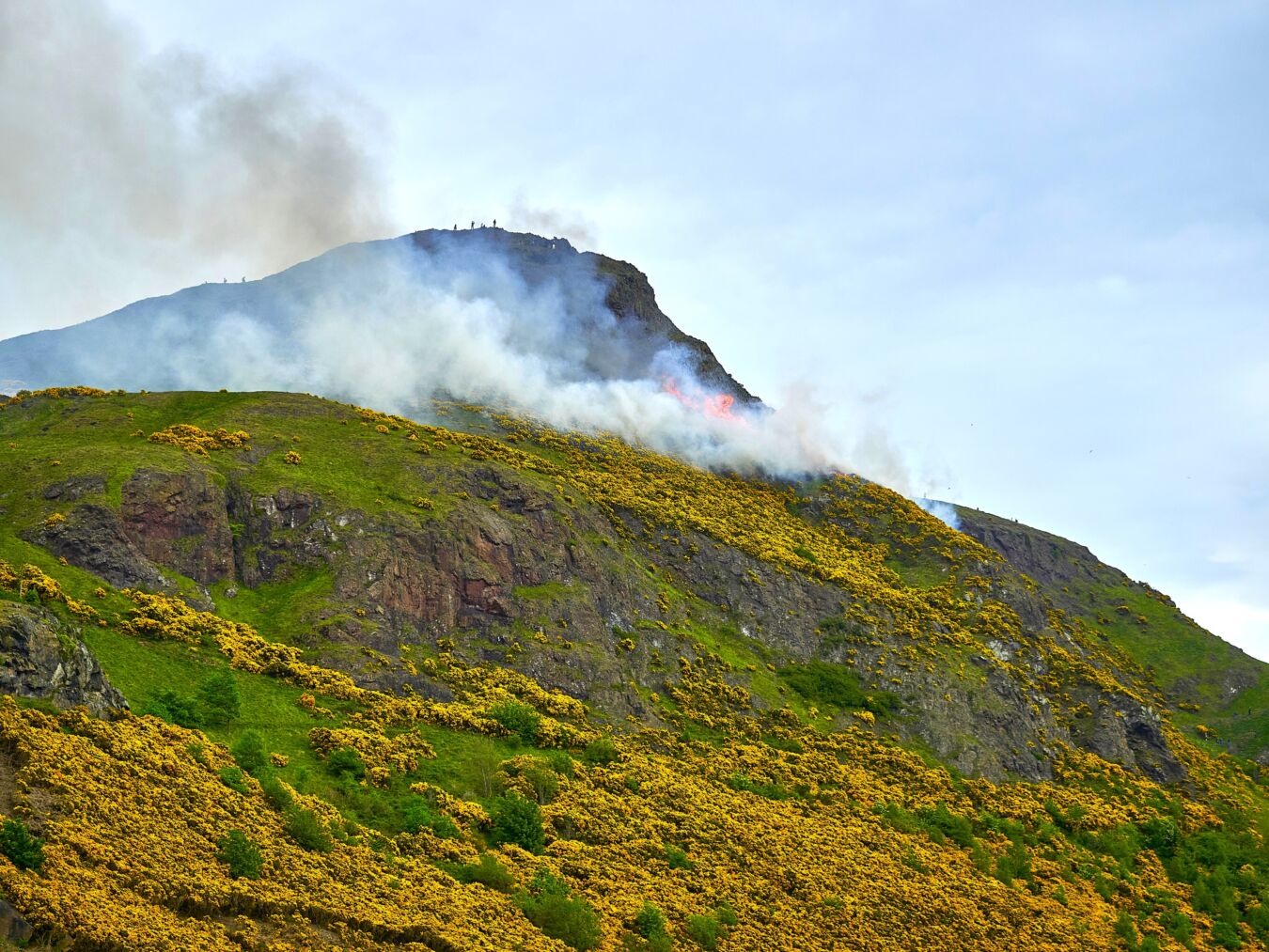
For many rural communities in Scotland, fires in moorlands and forests are one of biggest threats they face. And one look at the statistics shows that the problem is becoming even more serious: 55 wildfires were recorded in Scotland in 2024, and 239 last year.
Precise data on how these fires start is hard to come by, for obvious reasons, but it seems undeniable that the vast majority are caused by humans, either deliberately or accidentally.
Those responsible for rural areas are taking action. The Scottish Government has published a Strategic Action Plan; one of Scotland’s two National Parks, Loch Lomond and the Trossachs, includes some restrictions around fires in its rules for campers; and the other, Cairngorms National Park, has gone further and introduced new byelaws. These significantly restrict people’s ability to light fires and barbecues in the Cairngorms National Park between 1 April and 30 September each year. They are contained in the Cairngorms National Park Fire Management Byelaws (2025), approved by the Scottish Government in September last year.
This article gives an overview of the new rules.
The background
The Cairngorms National Park is the largest in the UK. It covers about 1,750 square miles, and includes nine National Nature Reserves and 55 Munros. It also home to a large number of rare and endangered animal species, and over 18,000 people.
At first glance, the new byelaws might seem to contradict aspects of The Land Reform (Scotland) Act 2003, commonly known as the ‘right to roam’. This gives the public the right of responsible access to most land and inland water in Scotland for recreational and other purposes – including activities such as sightseeing, picnicking, camping and cycling.
But what exactly does ‘responsible access’ mean here? The Scottish Outdoor Access Codes set out guidance on this subject: it includes respecting the privacy, safety and livelihoods of those living or working in the outdoors; caring for the environment; and taking responsibility for one’s actions. This article looks at the rights and responsibilities of people who are camping in rural areas – an activity which has the potential to cause serious damage, including wildfires.
The detail
Under the new byelaws, which apply only to the Cairngorms National Park, it is an offence to light, have or tend a fire; to place, throw, or drop a lighted match; or do anything likely to cause a fire, unless it is fully contained within specific settings. These include:
- A private dwellinghouse or (put simply) the land immediately around it
- A fireplace inside a bothy (the word ‘bothy’ is precisely defined)
- A licensed caravan site (with the owner’s permission)
- A private property (this must be done under the control of the landowner, tenant or occupier; and, if this person is the occupier, they must have the written permission of the landowner or tenant)
It is also an offence to light or use a non-gas barbecue, unless it is contained within a private dwellinghouse, a licensed caravan site, or within private property. (The specific details are similar to those described above.) Using a gas barbecue is permitted, provided it is used in such a manner as to not cause danger of or damage by fire. And using a camping stove is also allowed, so long as it is manufactured as a camping stove or cooker, and is not wood- or coal-based.
Enforcement is also covered in the new rules. It is an offence for any person to refuse to provide their full name, address, date and place of birth, telephone number and email address (if any) to any person authorised in writing by the Cairngorms National Park Authority who has reasonable grounds to believe that such person has committed an offence under the byelaws.
Contravening any of the new laws is a criminal offence, and anyone convicted can be fined up to £500.
Conclusions
Rural wildfires are clearly a serious and increasing problem, and the new byelaws are an appropriate response. They introduce rather wide-ranging new restrictions, while also allowing for some specific and precisely defined exceptions. As Cairngorms National Park is the first to do this, we will need to wait and see how the new rules work in practice. It will also be interesting to watch Loch Lomond and the Trossachs, and other park authorities around the UK, to see whether they also introduce new rules and if so how.
We have not had space here to include all the detail of the new byelaws, but you can read and download the full text on the Cairngorms National Park website. And if you would like to discuss further anything covered in this article, or any other related issue, feel free to contact our Rural Disputes team.
Contributors:

Shona Lean
Solicitor
Further / related posts

23 October 2026
Bang on: The laws around fireworks displays
Contributors:
Stephanie Hepburn, Kevin Clancy
23 October 2026
Contributors:
Killian Dockrell, Shona Lean
23 October 2026
Let the right one in: Prescriptive servitudes
Contributor: Stephanie Hepburn
To find out more contact us here
Sectors: Rural Property and Business